
Physiotherapy service
Sports injuries
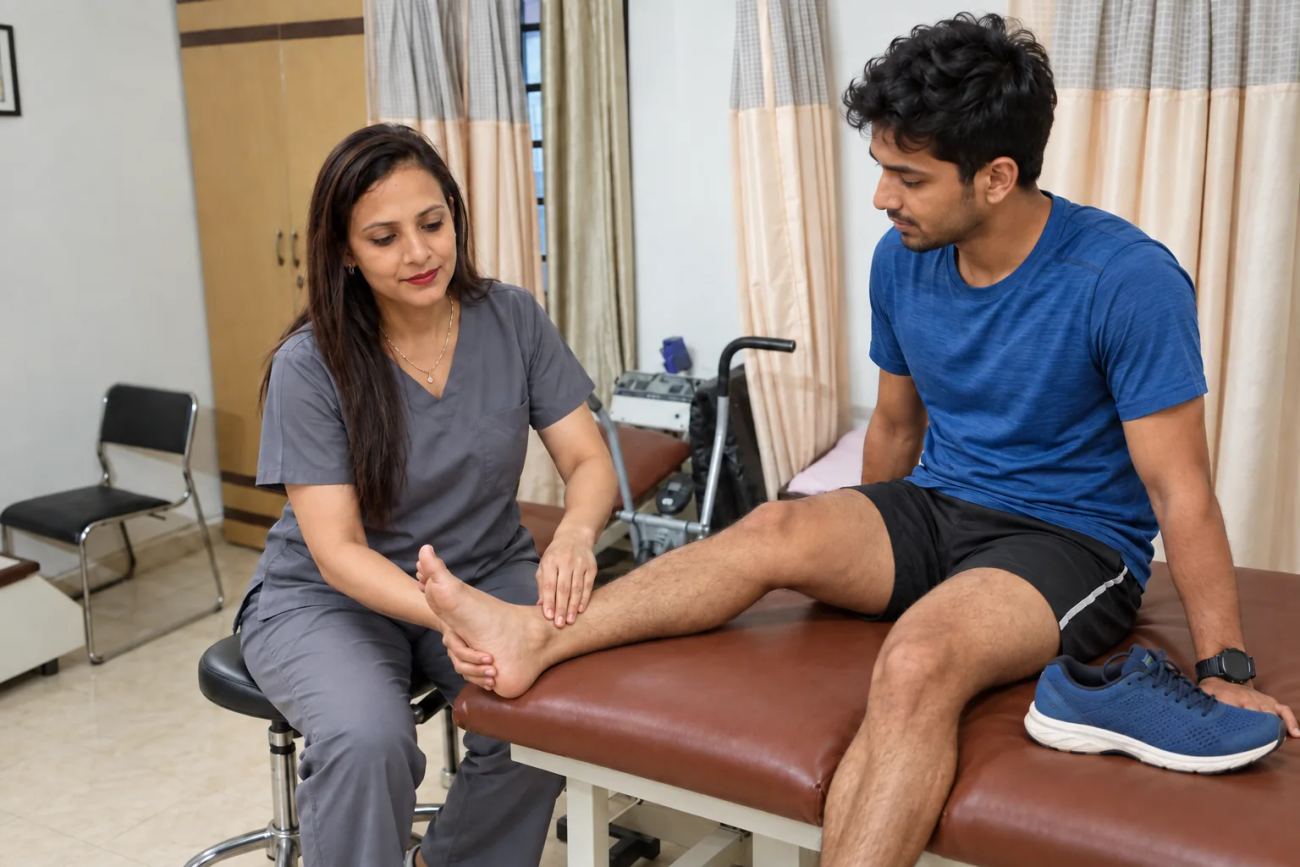
Assessment and rehabilitation planning for activity related pain, sprains, strains and a considered return to sport.
Book on
Areas of support
- Sprains and strains
- Running related concerns
- Training load changes
- Return to sport planning
- Recurring activity related symptoms
Tell the full injury story
The sport is only one part of the picture. Explain the movement involved, whether there was a sudden incident, what happened immediately afterwards and what you can or cannot do now.
Mention recent changes in training frequency, distance, intensity, surface, footwear or equipment. Also bring details of earlier injuries and any competition or work deadline that affects your decisions.
Sprain and strain do not mean the same thing
A sprain affects a ligament, while a strain involves muscle. Both may cause pain, swelling, bruising and difficulty using the area, so a short symptom list cannot confirm which tissue is involved or how serious the injury is.
The assessment should consider the mechanism, current function and whether medical investigation is needed before rehabilitation begins.
What a sports assessment may include
The physiotherapist may assess movement, strength, balance and the specific action that causes difficulty. For a runner this might include walking, a squat or a step task before any higher demand movement is considered.
The choice of test should match the stage of recovery. A painful recent injury and a gradual return to competition do not need the same starting point.
- The exact movement or training session linked to symptoms
- Swelling, bruising, instability or loss of function
- Recent training and recovery pattern
- Previous injury and rehabilitation history
- The level and date you hope to return to
Rehabilitation is more than symptom relief
A return to activity may require restoring movement, strength, balance, control and tolerance for repeated sport specific work. Feeling better during ordinary walking does not automatically mean the body is ready for sprinting, jumping or changing direction.
Ask which capacity is being rebuilt, how it will be tested and what should be achieved before the next stage.
Returning to sport in stages
A staged return can move from basic daily activity to controlled training and then to the demands of practice or competition. The sequence and timing depend on the injury, the assessment and the way the body responds.
A date alone is not clearance. Discuss the movements, training volume and recovery between sessions with the clinician guiding your return.
Use setbacks as information
A change in symptoms after training can help identify whether the current amount was appropriate. Record what you did, when symptoms changed and how long the change lasted.
Do not try to make up for missed sessions by suddenly adding more work. Ask how to adjust the plan and return to a manageable level.
Signs that need prompt medical care
Seek urgent assessment when an injury is very painful or rapidly worsening, swelling or bruising is substantial, or you cannot bear weight for a few steps. A crack at the time of injury, a visible change in shape, numbness, tingling, a cold limb or unusual colour can indicate a more serious injury.
These situations should not wait for a routine sports physiotherapy appointment.